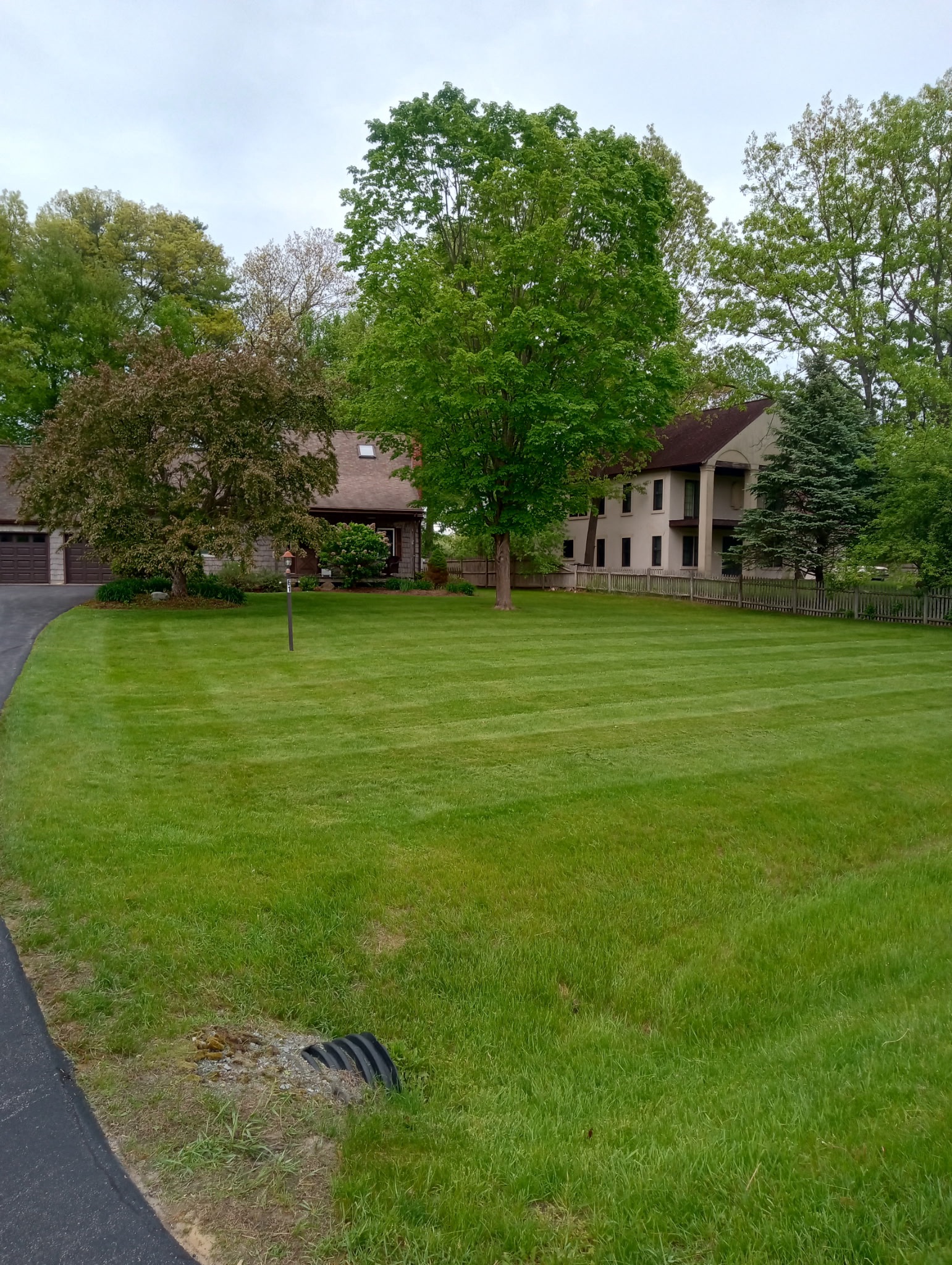
Sod isn't finished
the day it's laid — it's just getting started.
Sod gives you an instant-looking lawn, but underneath it the roots have been cut and the grass is under stress until it knits back into the soil. The installation method matters, and so does what happens with the hose in the weeks right after.
Four ways to lay sod
How the sod goes down affects how fast it fills in, how much it costs, and how well it holds on tricky ground.
Solid Sodding
Full rolls of sod laid edge-to-edge with no gaps, giving complete coverage and an instant, finished-looking lawn.
Strip Sodding
Strips laid with small gaps between them, using less sod up front while the grass spreads to fill the seams over time.
Sod Plugging
Small squares or plugs of sod are planted at intervals and left to spread and fill in naturally, typically with warm-season grasses.
Staked Slope Sodding
Sod on slopes is pinned in place with stakes or biodegradable netting so it can't slide before roots anchor it to the ground.
Sod is living grass with its roots already cut
Unlike seed, which can sit dormant in dry soil and simply wait for water, sod is already-growing grass that's had most of its root system sliced away when it was harvested. The moment it's laid, it starts losing moisture through its blades with almost nothing left underneath to pull water back up from the soil.
That's why sod needs to be watered within about 30 minutes of being laid, and soaked thoroughly enough that water reaches through the sod and into the soil beneath it. Skipping or delaying that first watering is one of the most common reasons new sod dies or turns brown in patches within days.
From there, the goal is keeping the sod and the soil underneath it consistently moist until new roots grow down and physically knit the sod to the ground. Until that happens, the sod is essentially floating on top of the soil rather than anchored into it.
Watering is what turns sod into a rooted lawn
Good installation gets the sod in place, but it's still just cut turf sitting on top of the ground until watering does the work of helping it root in. Plan on several weeks of consistent attention before it can be treated like an established lawn.
Soak it immediately, then keep it wet
Water within 30 minutes of laying, deeply enough to saturate the sod and the soil beneath it. For the rest of day one, don't let it dry out.
Most critical windowWater daily, sometimes twice a day
Keep the sod and the soil underneath consistently moist. In hot or windy weather, that may mean watering both morning and afternoon.
Check for rooting, start easing off
Gently tug a corner of sod — resistance means roots are taking hold. Begin spacing out watering while still keeping it moist, encouraging roots to reach deeper.
Root development stageMove to a normal watering schedule
Once roots are firmly anchored and the sod resists a solid tug, transition to a standard deep-and-infrequent watering routine like an established lawn.
The common thread: the installation method gets the sod in place, but watering — starting within the first 30 minutes and staying consistent for the weeks that follow — is what actually keeps it alive long enough to root.
/filters:strip_exif()/filters:no_upscale()/media/131a3eaa-e8f5-4d55-8ec1-b9d7143cc436.jpeg)
/filters:strip_exif()/filters:no_upscale()/media/a7908911-5a69-4430-8eef-8a444261226a.jpeg)
/filters:strip_exif()/filters:no_upscale()/media/6143cddd-6b04-4515-bbdd-0326a99ae9ad.jpeg)
/filters:strip_exif()/filters:no_upscale()/media/09932830-e253-4182-a7a8-63c66735239b.jpeg)
/filters:strip_exif()/filters:no_upscale()/media/c959424b-f7a6-4314-9c89-b20662267a64.jpeg)
/filters:strip_exif()/filters:no_upscale()/media/b8282d82-c050-446f-8c3b-4b42e423775a.jpeg)
/filters:strip_exif()/filters:no_upscale()/media/635f5c85-2786-4936-b1b7-41cfbf5b8c00.jpeg)
/filters:strip_exif()/filters:no_upscale()/media/8ef2a7f9-576a-4070-923d-2b8958addfb3.jpeg)
/filters:strip_exif()/filters:no_upscale()/media/f571a297-c8d1-484b-a627-220365b7f33b.jpeg)
/filters:strip_exif()/filters:no_upscale()/media/055d82a0-1fe6-429d-a156-f231a5f145ce.jpeg)